President
Trump has a lot of work to do during his 10-day tour in Asia. In
Japan and South Korea, he tried to reassure the nervous allies that
the United States has not granted regional sovereignty to China. In
Vietnam and Philippines, he has to communicate the US pursuit of
balancing China's influence in Southeast Asia.
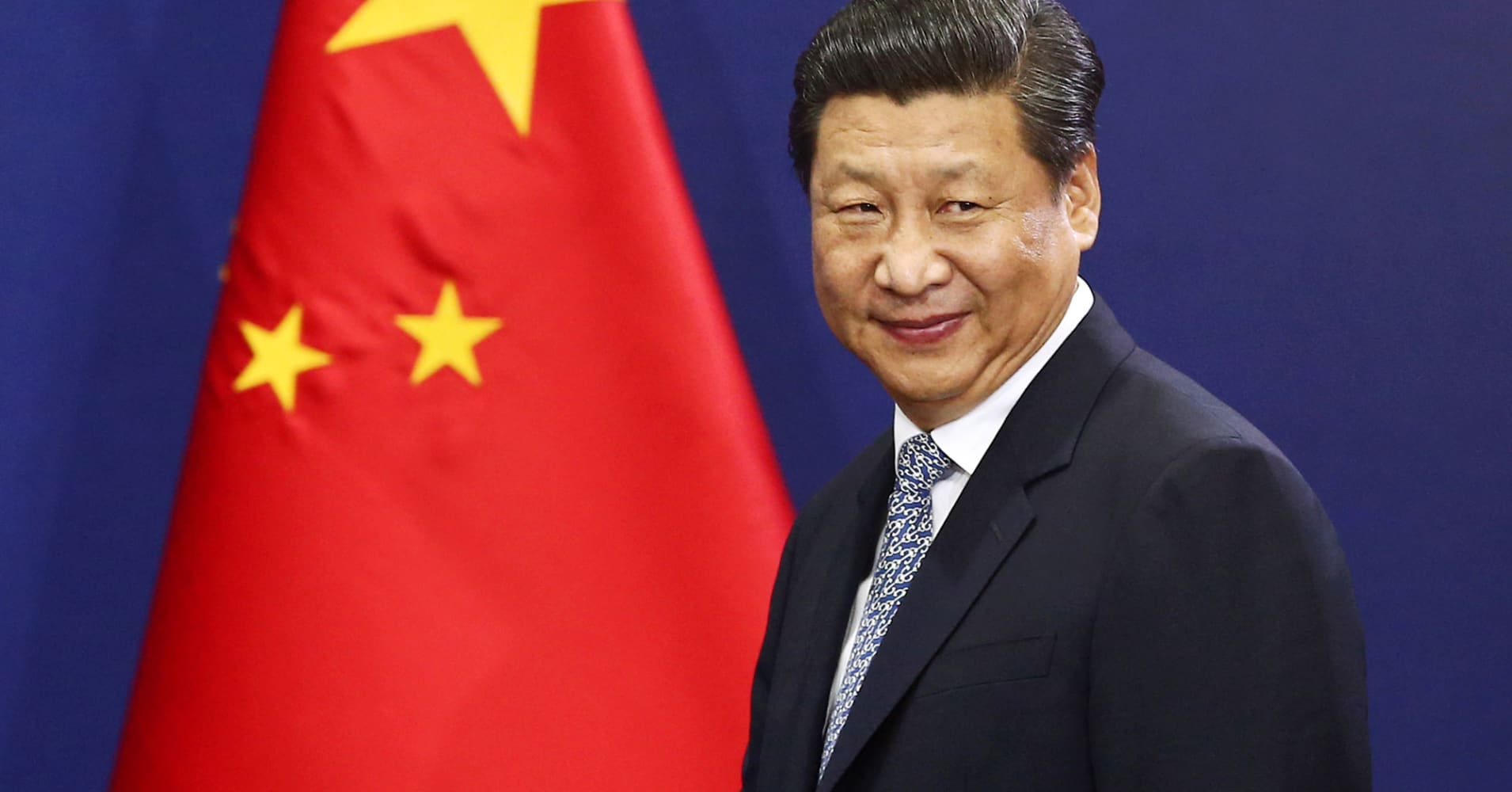
But
the most important stop is in Beijing where Trump already meets with
President Xi Jinping for the first time since the Chinese leader
announced a "new era" in global politics at his party's
central council in October. Trump will try to exercise strong
pressure, calling for closer cooperation on the North Korea issue and
resolving trade disputes. But he goes in a moment where China, not
the US, is the strongest player in the global economy.
According
to Time, the Chinese totalitarian-capitalist model shouldn't
supposedly survive in a global free market, let alone thrive. Until a
few years ago, it was common perception that China would soon need a
fundamental political reform to keep the state legitimate, and that
it could not maintain for a long time its state capitalist system.
Today, China's political and economic system is better equipped and
perhaps even more viable than the American model that has prevailed
since the end of WWII.
While
the US economy remains the world's largest, China's ability to use
state-owned companies ensures that the emerging giant is on the track
to surpass US GDP in 2029, according to the Center for Economic and
Business Research.
At
the same time, the leaders of other emerging powers - not just
Russia, but also republics like India and Turkey - follow China's
example on building systems where the government is engaged in trade,
while reinforces control of domestic politics, competition and
information. This process has been launched for many years, but China
has now its most powerful leader for decades and the US has the
weakest.
The
Americans and Europeans have bet on the fact that the long arc of
human development is turning towards liberal democracy. What if they
are wrong?
There
is an old story according to which, free-market economist and
fundamentalist Milton Friedman, during a trip to China several
decades ago, he visited an area where the workers were building a
canal. When he asked his host why the workers used shovels and
strollers rather than modern equipment such as tractors, he replied
that the purpose of the project was to create jobs. If you want jobs,
then give these workers spoons instead of shovels, Friedman said.
Times
have changed since then, but the reality, not that much. It is much
easier for Xi Jinping to guide Chinese officials in terms of creating
and protecting jobs than, for example, for Barack Obama to persuade
Democratic legislators to rescue the car industry after the economic
crisis in the US. Beijing offers immediate economic and political
support to its strategic industries 365 days a year, provides direct
funding to strategic sectors, legislates with these criteria, deals
with industrial espionage and cyber attacks against foreign
competitors.
This
protection net is being proved particularly important at a time when
the most significant variables in the world are the rate and scale of
technological changes. Automation has already begun to threaten jobs
in the developed world. 87.8% of the jobs lost in US industries
between 2000 and 2010 was the result of automation and advanced
technology, according to a study by the Ball State University in
2015. Technological development is now ready to displace hundreds of
millions of workers in the developing world. But strict control of
the economy by the Chinese government will certainly help absorb the
shock, which will have far greater impact elsewhere.
Examples
are the three major oil companies in China. CNOOC, PetroChina and
Sinopec have benefited from government funding and
liquidity-providing services through state-owned banks. That is why
the indebted state biotech giant, ChemChina, has managed to acquire
the Syngenta Swiss company and its assets for $ 43 billion, since the
Chinese government has made it clear that food security in China is a
strategic priority and that the state financially guarantee for
ChemChina, in order to contribute to stability. Private businesses
also benefit. Huawei Telecom is ready to dominate, especially in
developing countries, thanks to the China Development Bank credit
line, which consistently supports the political agenda of the Chinese
government.
But
jobs and industry are not the only ways in which China secures
political unity and stability. It also uses technology to strengthen
political control by the ruling party, in ways that Western
governments would like to do. At a time when new generations interact
with society mainly through smartphones, we will see tremendous power
in those institutions or companies that have the means to control
these interactions and the data they produce.
But
China's most important aspiration concerns Artificial Intelligence.
Research and exploitation of technological breakthroughs in this
sector require the type of planning and investment that the US did
for space to reach the moon. However, the US government has entrusted
this field, as well as the wider innovation, to Silicon Valley. On
the contrary, the Chinese government itself has taken over the AI
sector.
Of
course, China's system can withstand the shocks of today's world, but
its citizens living in it suffer political oppression and injustice
at all levels. Also, as companies in China struggle with debt, the
ability of the state to rescue them is not inexhaustible. As it is
also not inexhaustible the ability to control its citizens and to
avoid social unrest. However, in the near future, China is likely to
remain strong and stable. Its international presence will continue to
grow.
In
October, Xi Jinping said it is time for China to "become the
epicenter of the world." In this fragmented world, no government
will have the international influence needed to continue to define
the political and economic rules governing the global system. But if
you had to bet on a country that is in the best position today to
expand its influence with its partners and opponents, it would not be
wise to bet on the US. The smartest move for high return on your
money would be probably to bet on China.
Main
parts of article translated from:
Comments
Post a Comment